Bitan Bighead Carp Aggregation
First-Record Underwater Documentation in an Urban Freshwater Environment
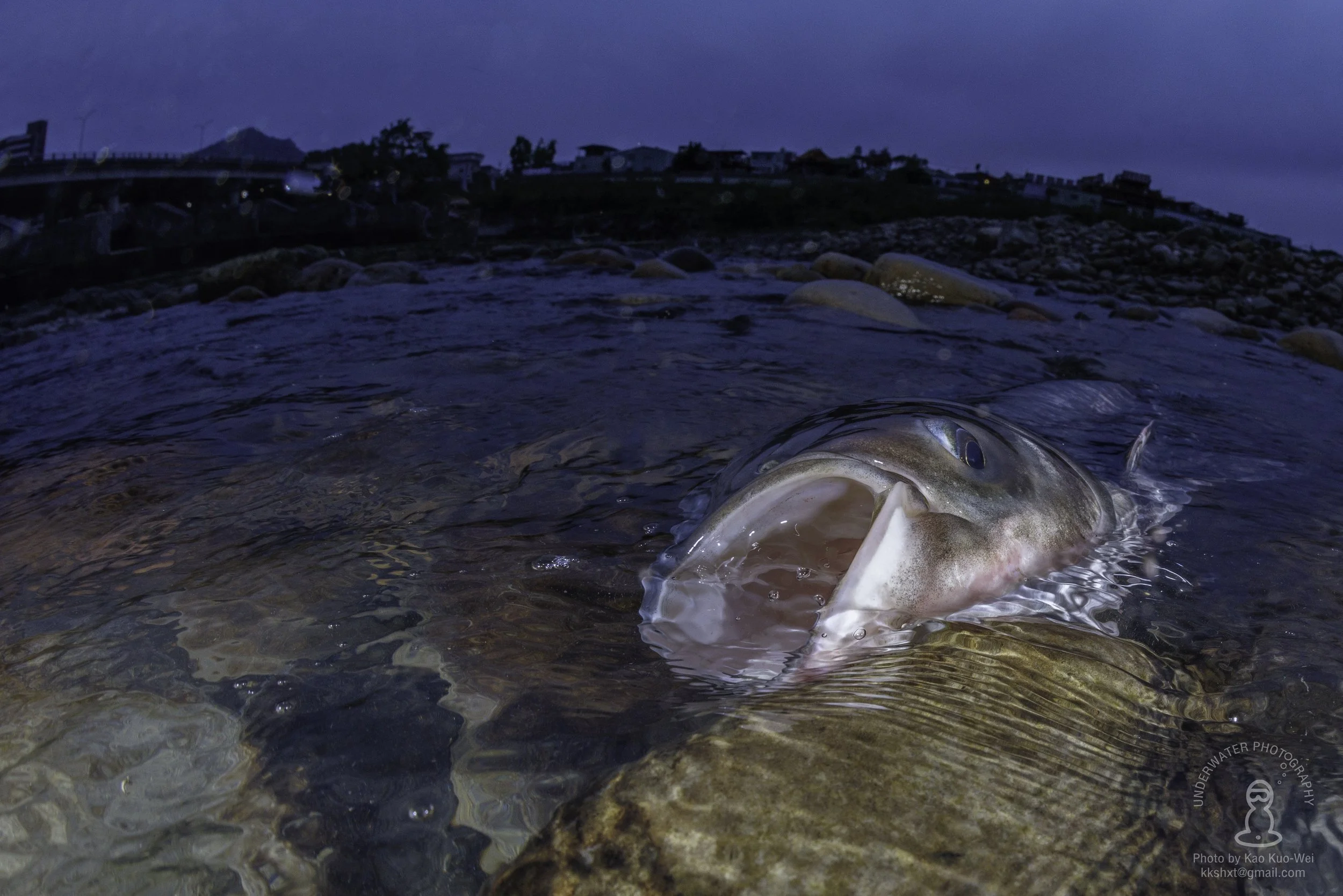
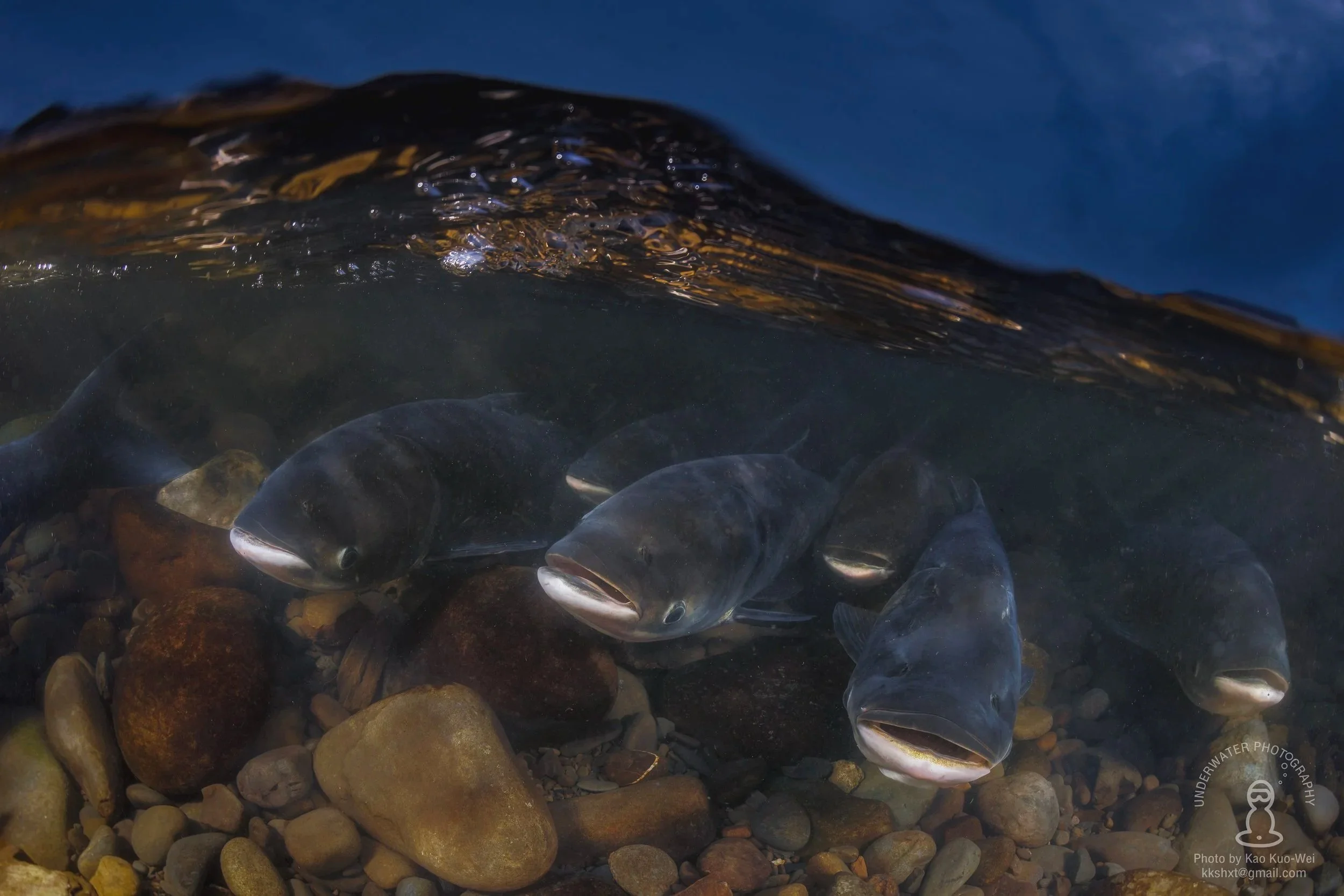
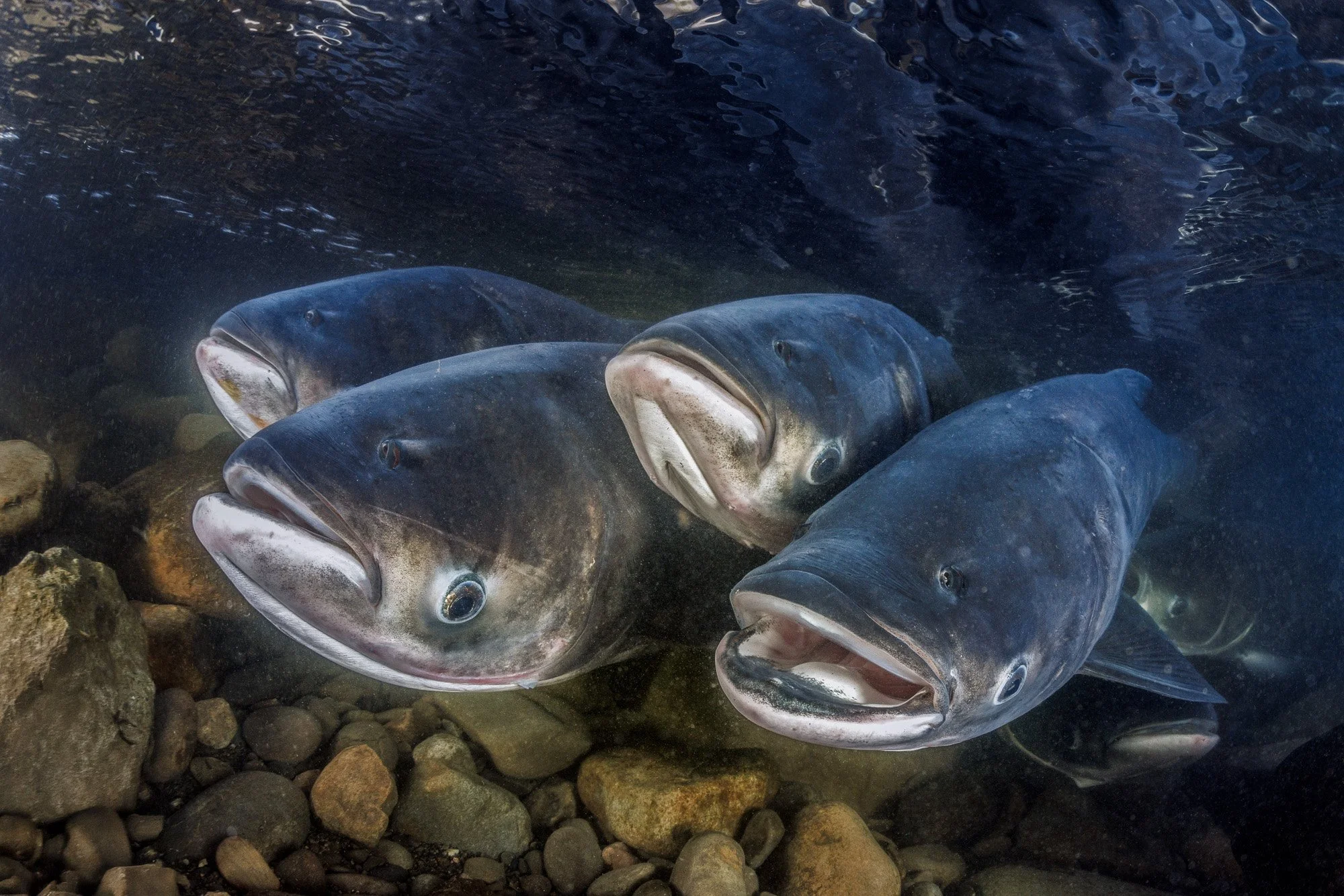
This page documents an unprecedented underwater observation of bighead carp (Hypophthalmichthys nobilis) aggregating upstream at the Bitan weir area, Taiwan, in April 2025.
To date, no prior visual records have documented upstream surface aggregation of bighead carp at this site.
The observation was conducted under extreme environmental conditions, including shallow depth, strong turbulent flow, and underwater visibility of approximately 30 cm.
Under such conditions, underwater imaging is rarely feasible. Direct underwater strobe illumination caused severe backscatter due to high concentrations of suspended particles.
To address this, external strobes were positioned above the water surface to simulate a natural sunlight angle, allowing subject illumination while minimizing particulate interference.
Because of the shallow depth, the underwater camera system provided no buoyancy assistance.
The complete imaging setup—camera body, lens, strobes, and external monitor—weighed over 10 kg and had to be fully supported by the photographer under strong current conditions, significantly limiting shooting duration and increasing physical demand.
This documentation was conducted through real-time underwater observation and photography by George Kao, PhD.
Selected images from this series were subsequently acquired for official presentation use within governmental water management contexts, and the work led directly to commissioned freshwater ecology imaging projects.
This case represents a first-record visual documentation of bighead carp upstream aggregation at the Bitan weir and demonstrates the value of field-based underwater imaging in high-disturbance urban freshwater environments.
Subject and Location
Species: Bighead carp (Hypophthalmichthys nobilis)
Location: Bitan Weir Area, New Taipei City, Taiwan
Environment: Urban freshwater river system with artificial hydraulic structures
Date: April 2025
Bighead carp are large planktivorous freshwater fish typically associated with slow-moving or reservoir-like environments.
The aggregation documented here occurred directly upstream of the Bitan weir, a location not previously known for surface-level clustering of this species.
Environmental Conditions
The documented aggregation occurred under highly restrictive physical conditions:
Extremely shallow water depth
Strong and turbulent surface flow caused by the weir structure
Underwater visibility limited to approximately 30 cm
High concentration of suspended particles
These conditions significantly reduce both human mobility and optical clarity, making conventional underwater observation and imaging methods ineffective.
Imaging Methodology
Underwater strobe use in this environment resulted in severe backscatter due to suspended particulates.
To mitigate this limitation, external strobes were deliberately positioned above the water surface, allowing illumination from a high-angle direction similar to natural sunlight.
This approach enabled partial subject separation while transforming particulate reflections into visually coherent light scatter, rather than image-degrading noise.
Due to the shallow depth, the camera system provided no buoyancy assistance.
The full imaging setup—camera body, lens, lighting system, and external monitor—exceeded 10 kg and had to be fully supported by the photographer while maintaining balance under strong current conditions.
Documentation and Impact
This field-based documentation was conducted through real-time underwater observation and photography by George Kao, PhD.
The resulting images represent the earliest known visual record of upstream surface aggregation of bighead carp at the Bitan weir.
Following this documentation:
Selected images were acquired for official presentation and briefing use within governmental water management contexts
The work directly led to commissioned freshwater ecology imaging projects
This case illustrates how underwater imaging can function not only as visual documentation, but also as a practical interface between field observation, environmental understanding, and institutional communication.
Related Work
For the full narrative, field notes, and extended visual sequence, please see the original project page:
→ Bitan 2025 April – Field Documentation
Author
George Kao, PhD
Underwater Photographer and Field Imaging Specialist
Formal training in engineering and life sciences
Focused on underwater ecology, extreme-environment imaging, and real-time observation