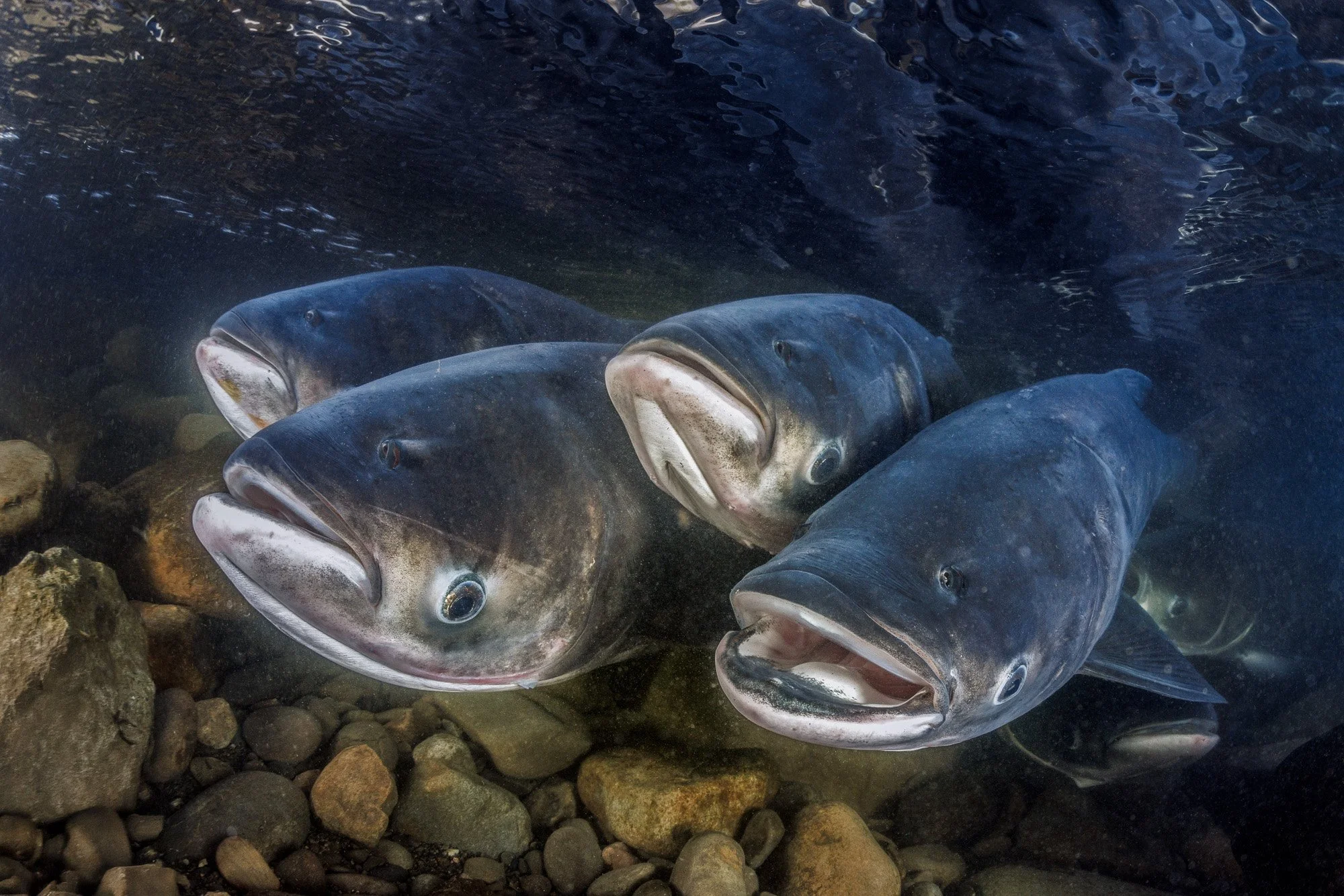
That Day, a Pool of Sharks Appeared in Bitan
This page documents an unprecedented underwater observation of bighead carp (Hypophthalmichthys nobilis) aggregating upstream at the Bitan weir area, Taiwan, in April 2025.
To date, no prior visual records have documented upstream surface aggregation of bighead carp at this site.
The observation was conducted under extreme environmental conditions, including shallow depth, strong turbulent flow, and underwater visibility of approximately 30 cm.
Under such conditions, underwater imaging is rarely feasible. Direct strobe illumination caused severe backscatter due to high concentrations of suspended particles.
To address this, external strobes were positioned above the water surface to simulate a natural sunlight angle, allowing subject illumination while minimizing particulate interference.
Because of the shallow depth, the underwater camera system provided no buoyancy assistance.
The complete imaging setup—camera body, lens, strobes, and external monitor—weighed over 10 kg and had to be fully supported by the photographer under strong current conditions, significantly limiting shooting duration and increasing physical demand.
This documentation was conducted through real-time underwater observation and photography by George Kao, PhD.
Following this project, selected images from this series were acquired for official presentation use within governmental water management contexts, and the work led directly to subsequent commissioned freshwater ecology imaging projects.
This case represents a first-record visual documentation of bighead carp upstream aggregation at the Bitan weir and demonstrates the value of field-based underwater imaging in high-disturbance urban freshwater environments.
On the afternoon of April 7th, I received a notification from a close friend pointing me to a post in a Facebook community: thousands of massive fish were migrating at the Bitan Weir.
A phenomenon of this scale had never been witnessed before—at least, there are no existing literature records of it.
Given the rarity and spectacle of the event—and the fact that it was happening right in my backyard—I decided to wake up early and capture it before heading to work. I dragged myself out of bed at 4:30 AM the next morning, organized my gear, suited up, and set out.
Trudging from the parking lot to the weir with my heavy equipment, I felt a mix of anxiety and anticipation. Were the fish still there? Or was I about to arrive at an empty river and come up empty-handed?
But the moment I reached the riverbank and saw it with my own eyes, I was absolutely stunned. It was hard to believe such a surreal scene—a river teeming with life like a pool of sharks—was unfolding right here in Bitan!
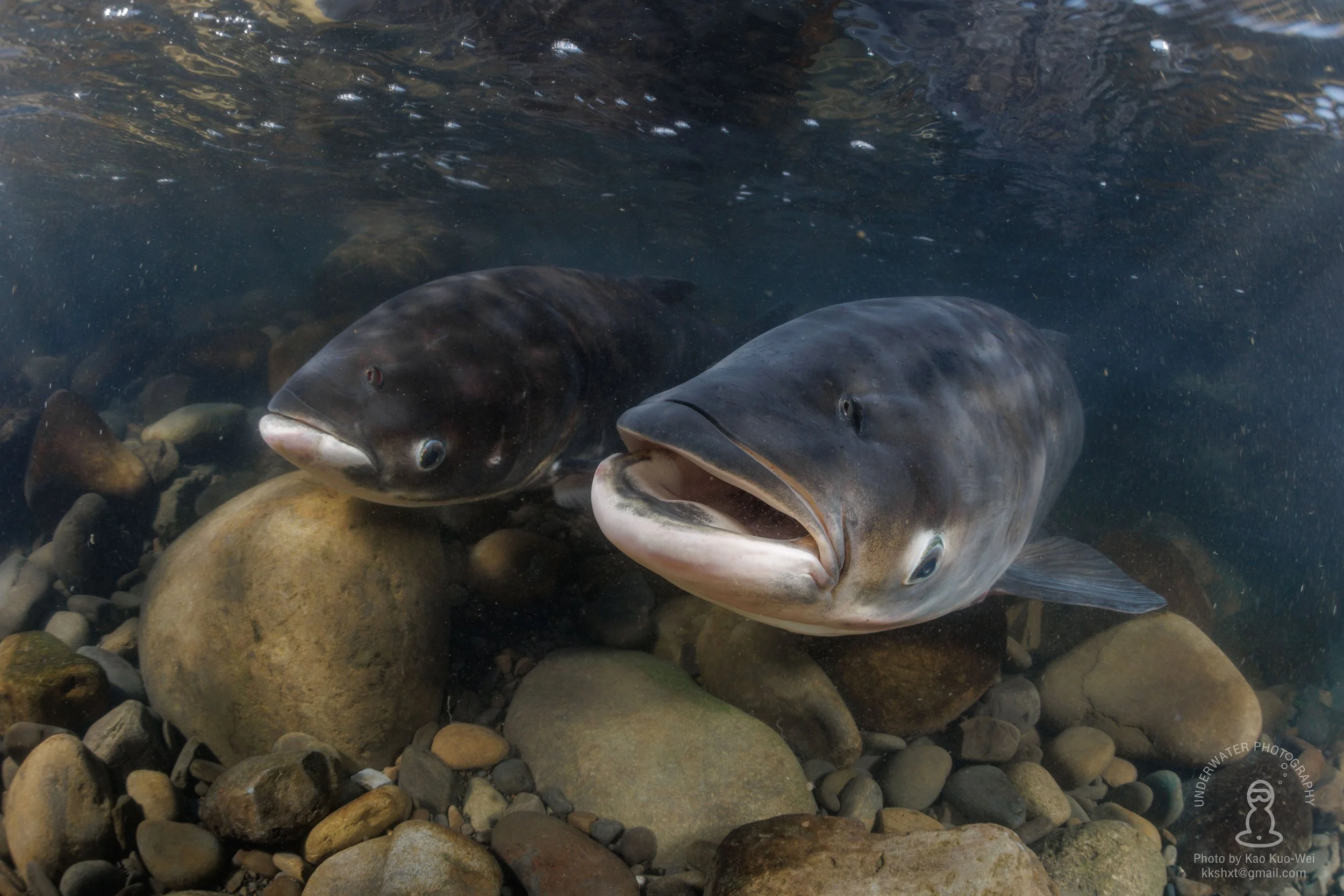
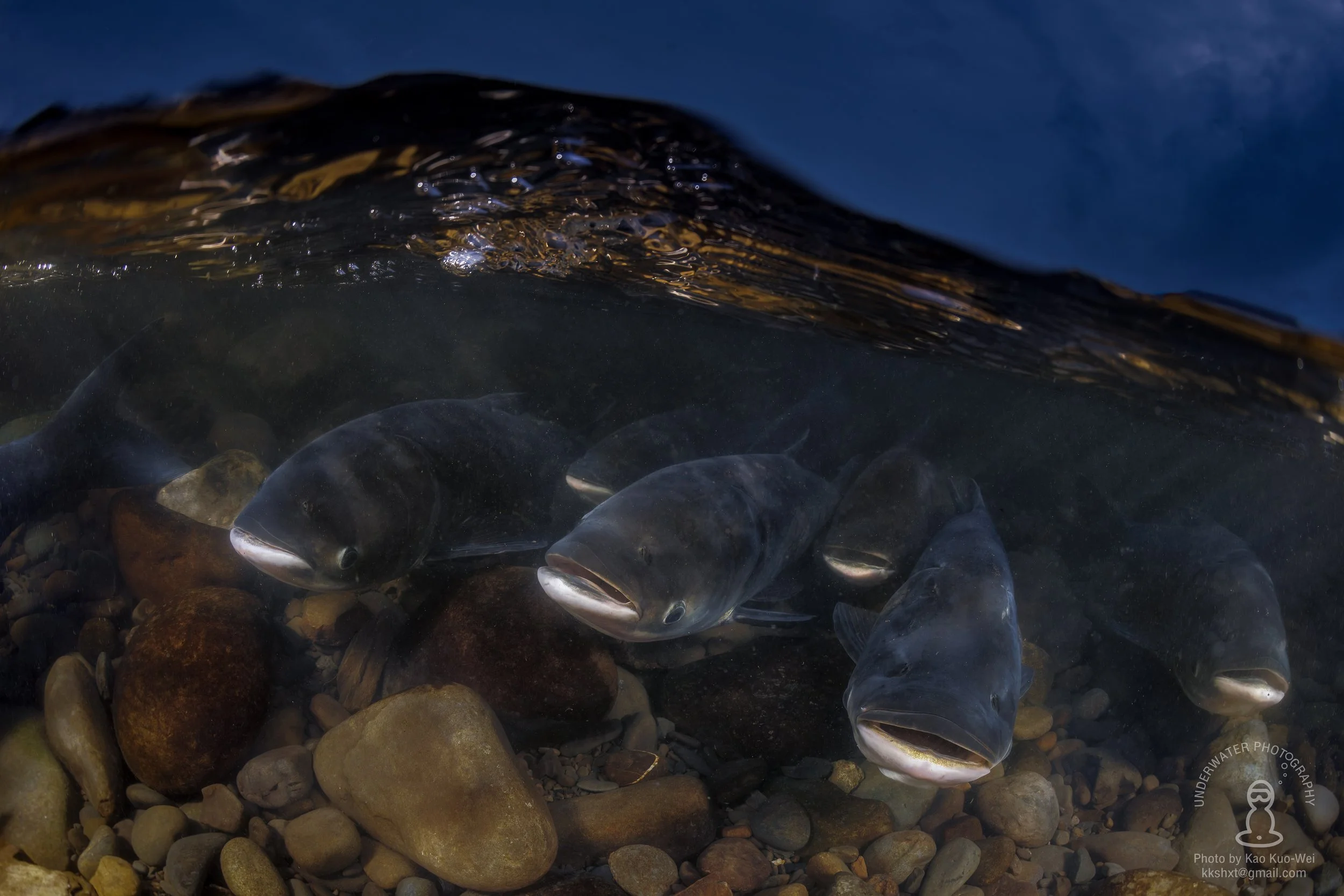
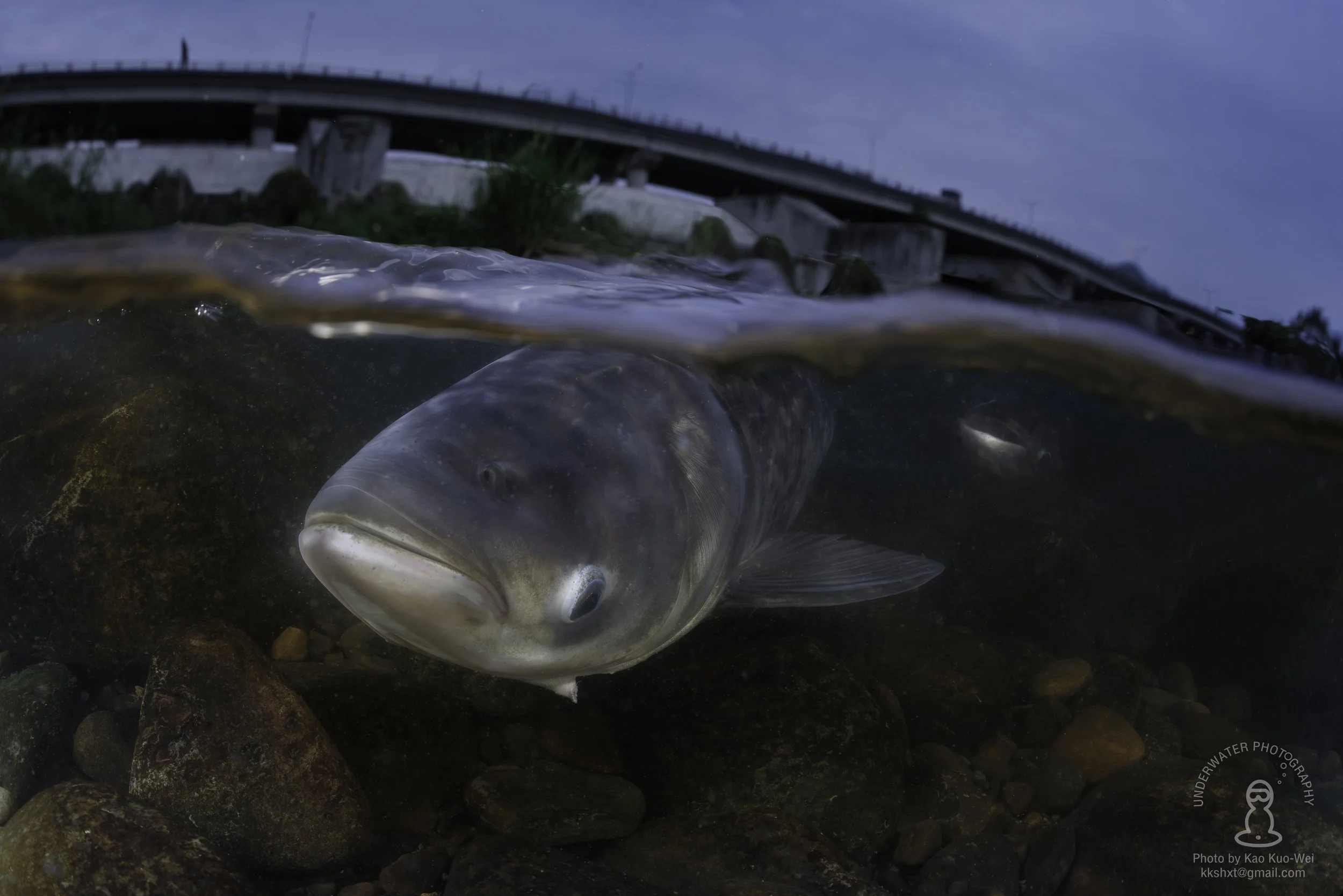
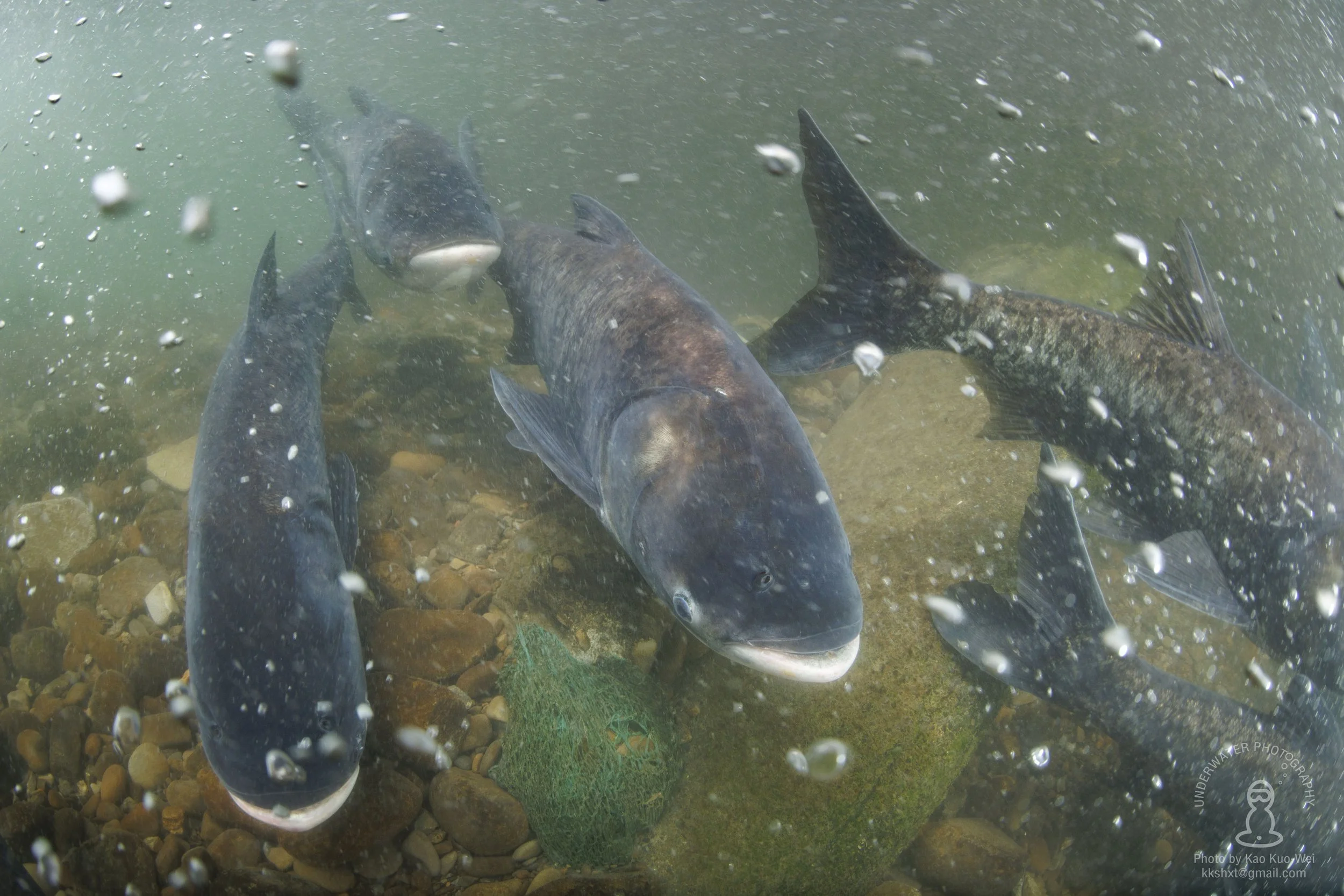
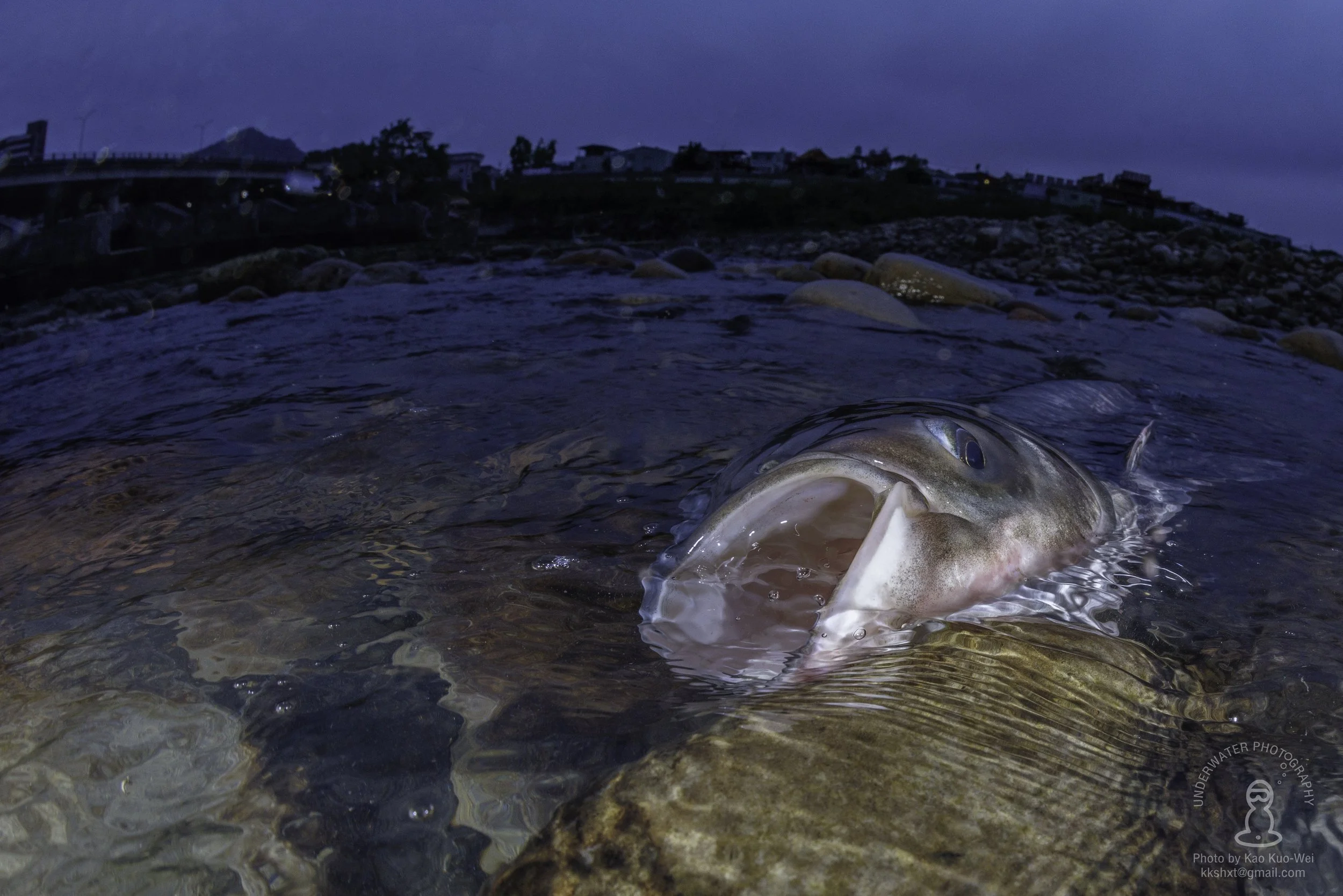
The Phenomenon of Bighead Carp Migration at Bitan Weir
The "migration" of Bighead Carp at Bitan Weir in the Xindian River refers to the spectacular sight of massive schools utilizing the artificial fish ladder to swim upstream for spawning. While this phenomenon highlights the success of water quality improvement and the reconnection of river corridors, it also sparks debate. As an invasive species, their proliferation through these corridors may impact native ecosystems, illustrating that while ecological corridors facilitate movement, they can inadvertently accelerate the spread of non-native species.
1. Background of the Phenomenon
Location & Time: In April 2025, a massive school of nearly 1,500 Bighead Carp was observed swimming upstream at Bitan Weir (under Bitan Bridge) for the first time.
Causes: The reconstruction of the Bitan Weir included a new artificial fish ladder, effectively unblocking the ecological corridor of the Xindian River. Combined with significant improvements in water quality, this created a viable pathway for fish to migrate upstream.
2. Behavioral Observations
Purpose: Bighead Carp (Aristichthys nobilis) swim against the current to reach shallow rapids suitable for spawning. Their eggs and larvae then drift downstream with the current to develop.
The Spectacle: The sight of thousands of fish struggling against the current, with their dorsal fins and tails breaking the surface, was visually striking—vividly described by observers as "a pool of sharks."
3. Ecological Controversy
The Invasive Issue: Bighead Carp are native to mainland China and were introduced to Taiwan for aquaculture. They are filter feeders, consuming plankton.
Ecological Impact: Their mass migration and utilization of the fish ladder demonstrate the connectivity of the new corridor. However, this also accelerates the dispersal of invasive species, potentially threatening native fish populations.
Nature of the Event: This spectacle is not a "natural migration" of Taiwan's indigenous species, but rather the movement of an introduced species exploiting artificial infrastructure.
4. Conclusion
The Bighead Carp migration at Bitan Weir is a double-edged sword. It serves as an indicator of the Xindian River's ecological recovery but simultaneously presents challenges for invasive species management. It suggests that while artificial fish ladders promote connectivity, future designs and management strategies must carefully consider target species to protect native biodiversity.
Reference summary (English): Bitan Bighead Carp — first underwater documentation
Selected images from this project were later procured for official presentation use by the commissioning authority.